Packaging Material Procurement | Essential Knowledge for Purchasing Paper Gift Box Packaging Materials
Introduction: Gift boxes account for a significant portion of cosmetic packaging costs, and their manufacturing processes are among the most complex in the industry. Compared to plastic packaging factories, gift box production requires substantially higher equipment investments, resulting in higher entry barriers for manufacturers.This article provides a concise overview of the fundamental knowledge surrounding gift box packaging materials. We welcome insights and corrections from industry professionals to enhance accuracy and depth.
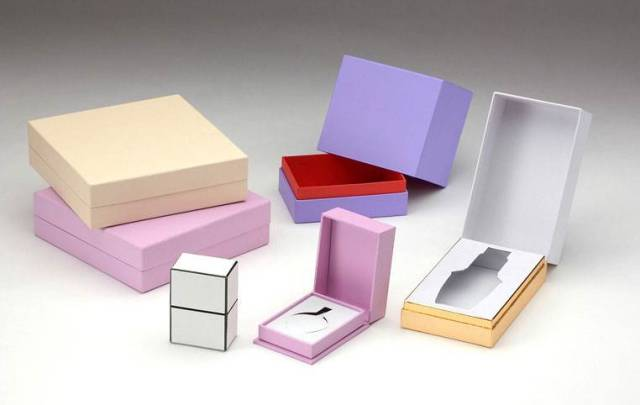
Printed cartons are folding boxes or fine corrugated boxes made from cardstock and fine corrugated board. In modern packaging, their role has transitioned from product protection to product promotion. Consumers now perceive a product's quality directly through the carton's craftsmanship.
Printed carton manufacturing processes are divided into prepress and postpress services. Prepress technology refers to the processes involved before printing, mainly including computer graphic design and desktop publishing, such as graphic design, packaging development, digital proofing, traditional proofing, and computerized sample cutting. Postpress services involve further product processing, such as surface treatment (varnishing, UV coating, lamination, foil stamping gold/silver, embossing), thickness processing (laminating corrugated board), die-cutting (cutting to final shape), carton forming, and bookbinding processes (folding, stapling, adhesive binding).


Graphic artwork and typesetting finalize packaging print files, followed by material selection.
After obtaining films (CTP plates), printing parameters are determined based on film size, paper thickness, and printing colors. Technically, printing is defined as the entire process comprising plate making (replicating original manuscripts into printing plates), printing (transferring graphic information from plates onto substrates), and postpress finishing (processing printed products for end-use applications such as book binding or box forming).
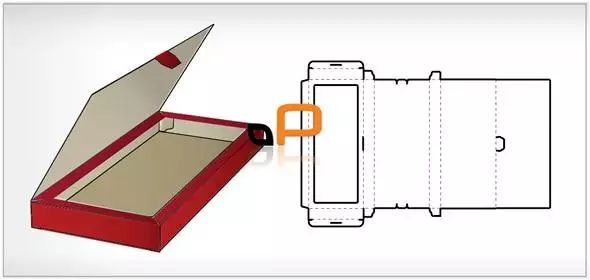
The production of die-cutting molds must be determined based on the sample templates and the semi-finished printed products.
Surface beautification treatments include lamination, foil stamping, UV coating, varnishing, etc.
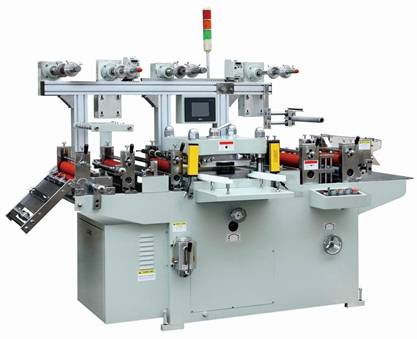
Using a die-cutting machine with dies to cut and form the printed carton into its basic shape.

According to the sample or design pattern, glue is applied to the fixed connection parts of the printed carton, which can be done either by machine gluing or manual gluing.

Varnishing is a process where a layer of oil is applied to the printed sheet and then dried using a heating device. There are two methods: one uses a varnishing machine, and the other uses a printing press to apply the oil. Its main purpose is to protect the ink from smudging and enhance glossiness, commonly used for standard products with lower requirements.

Polishing process: A layer of oil is applied to the printed sheet, which is then flattened under high temperature, light belt, and pressure using a polishing machine. This creates a smooth effect that alters the paper's surface, giving it a glossy physical property while effectively preventing printed colors from fading.
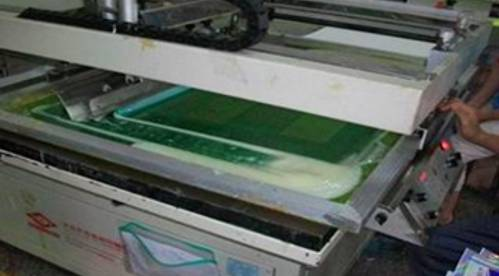
UV process involves applying a layer of UV varnish on printed materials, which is then cured into a film through ultraviolet light exposure. Two methods: full-cover UV and spot UV. This provides waterproofing, abrasion resistance, and gloss effects for products.
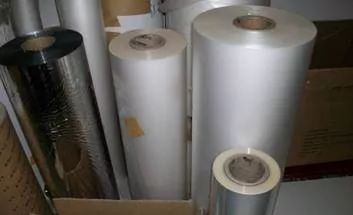
Lamination is a process where glue is applied to PP film, dried by a heating device, and then pressed onto the printed sheet under pressure. There are two types of film: glossy and matte. This makes the printed surface smoother, shinier, stain-resistant, water-resistant, and wear-resistant, with more vibrant colors and better durability, protecting the appearance of various printed materials and extending their lifespan.

Holographic transfer uses an embossing process to pre-press patterns onto a special PET film, followed by vacuum coating. The patterns and colors from the coating are then transferred to the paper surface. This creates an anti-counterfeiting effect with a glossy finish, enhancing the product's premium quality.
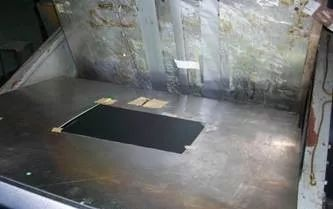
Hot stamping (foil stamping) is a special post-printing process that uses hot stamping equipment to transfer the color layer from metallic foil or other pigment foil onto printed materials under heat and pressure. Metallic foils come in various colors, with gold, silver, and holographic being the most common. Gold and silver foils are further divided into glossy gold, matte gold, glossy silver, and matte silver. Hot stamping enhances the premium quality of products.
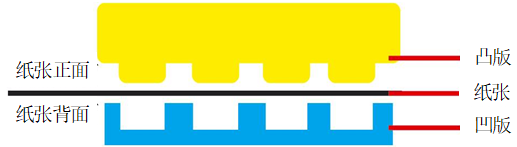
Embossing requires making one concave plate and one convex plate, which must have precise alignment accuracy. The concave plate (also called the female plate) has engraved patterns that match the final product's raised design direction. The embossing process enhances the product's premium quality.
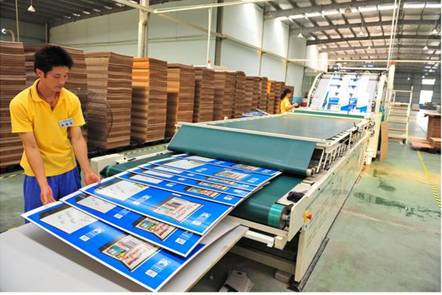
Paper laminating is the process of evenly applying adhesive to two or more layers of corrugated board, then pressing and bonding them to form packaging-grade board. This enhances the product's sturdiness and strength to better protect contents.

The face paper primarily refers to coated art paper, luxury cardstock, gold cardstock, platinum cardstock, silver cardstock, and holographic cardstock, which is adhered to the surface of corrugated paper and serves as the printable layer. Typically, coated art paper (also known as coated printing paper) is selected for this purpose - a premium grade printing paper manufactured by coating base paper with white pigment, characterized by its exceptionally smooth and flat surface, high evenness, and excellent gloss. Coated art paper comes in several varieties: single-sided coated, double-sided coated, matte coated, and textured coated papers, and is classified into three quality grades (A, B, and C). The double-sided coated variety features a smoother, more lustrous surface that delivers a high-end, artistic appearance, with common basis weights including 105g, 128g, 157g, 200g, and 250g.
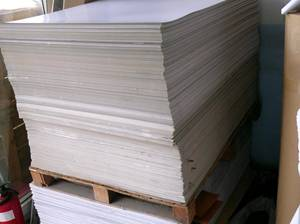
Corrugated paper mainly includes whiteboard paper, yellow board paper, containerboard (or hemp board paper), offset paper, and letterpress paper, which differ in basis weight, thickness, and stiffness. Corrugated paper consists of four layers: the surface layer (high whiteness), the lining layer (isolating the surface layer and core layer on both sides), the core layer (providing filling to increase board thickness and enhance stiffness), and the bottom layer (improving appearance and strength). Standard board weights include 230, 250, 300, 350, 400, 450, and 500 g/m². Standard flat board sizes are 787×1092 mm (small) and 889×1194 mm (large), while standard roll sizes include 26", 28", 31", 33", 35", 36", 38", and 40" (suitable for printing). Printed face paper laminated onto corrugated paper enhances stiffness for shaping purposes.
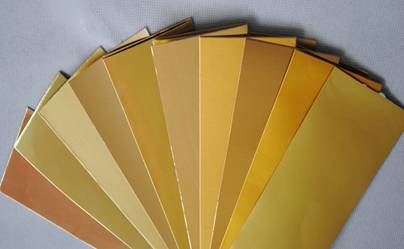
Cardboard mainly includes white cardboard, black cardboard, etc., with basis weights ranging from 250-400g/m². It is folded and placed inside paper boxes to assemble accessories and support products. The key difference between white cardboard and white board paper lies in their composition: white board paper is made from mixed wood pulp, while white cardboard is produced from virgin wood pulp, making it more expensive. The full-size cardboard undergoes die-cutting with steel-rule molds and is then folded into required shapes for placement inside paper boxes, providing optimal product protection.
Made from foldable paperboard with thickness ranging 0.3-1.1mm, these can be transported/stored flat before product loading. Advantages: Low cost, space-saving, high production efficiency, diverse structural designs Disadvantages: Low strength, less premium appearance - unsuitable for luxury gift packaging.
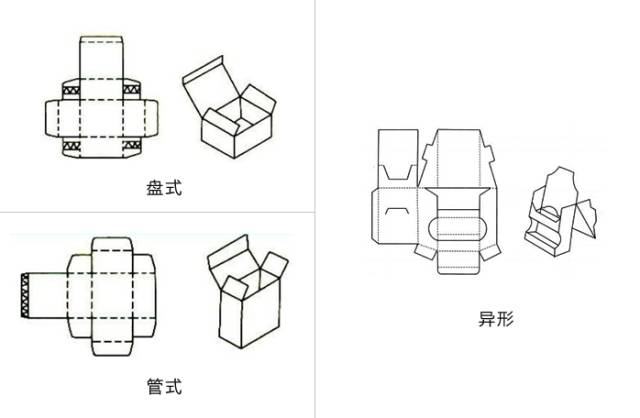
Lid on largest panel
Types: Cover lid, flip lid, snap-lock, push-down seal, drawer-style
Lid on smallest panel
Types: Tuck-in, lock-bottom, snap-lock, push-down seal, glued seal, tear-open lid
Hybrid tray/tube designs
Special-shaped folding cartons
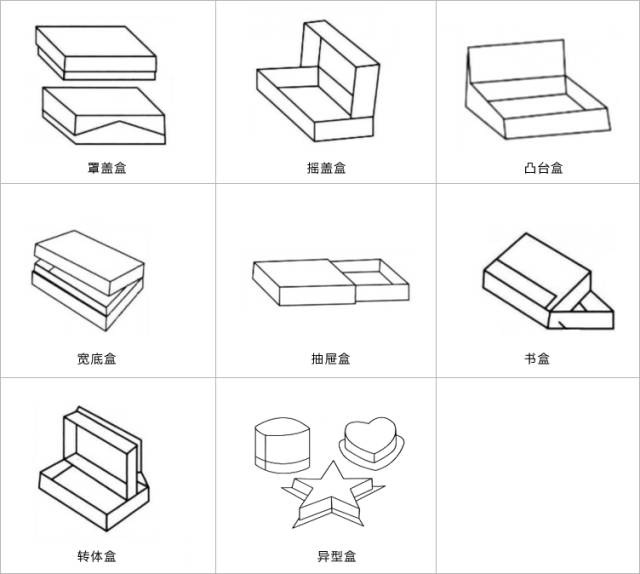
Constructed by laminating substrate board with facing materials, these cannot be folded flat after assembly. Advantages: Wide material selection, excellent puncture resistance, high stacking strength, ideal for premium gifts Disadvantages: High production cost, non-foldable, manual material positioning required, print registration challenges, low output, difficult logistics

Single-piece construction for base/body/bottom
Pro: Sturdy base structure
Con: Vulnerable side seams requiring reinforcement
Tubular (Frame-style):
Pro: Simple construction, easy production
Con: Base prone to detachment under pressure, visible adhesive seams affecting aesthetics
Composite:
Hybrid tray/tube designs
Special-shaped rigid cartons

In cosmetic products, gift boxes, premium boxes, etc., all belong to the category of printed cartons.
Printed cartons consist of multiple processes, but the general cost structure includes: face paper cost, corrugated paper cost, film, PS plate, printing, surface treatment, die-cutting, lamination, cutting die, gluing, 5% loss, tax, profit, etc.
Printing quality issues: color deviation, stains, graphic errors, lamination/calendering defects, embossing flaws, etc.
Die-cutting quality issues: mainly cracking, burrs, etc.
Gluing quality issues: adhesive failure, glue overflow, folding/forming defects, etc.

Previous
NoneNext
Packaging Basics | An Overview of Plastic Box Products Fundamentals
05Jun
08Jul
06Mar
04Dec
25Oct
16Oct
06Nov
Request a Quote
If you are interested in our products, you can leave us a message at any time.